Vast Unveils a Large Docking Adapter Standard

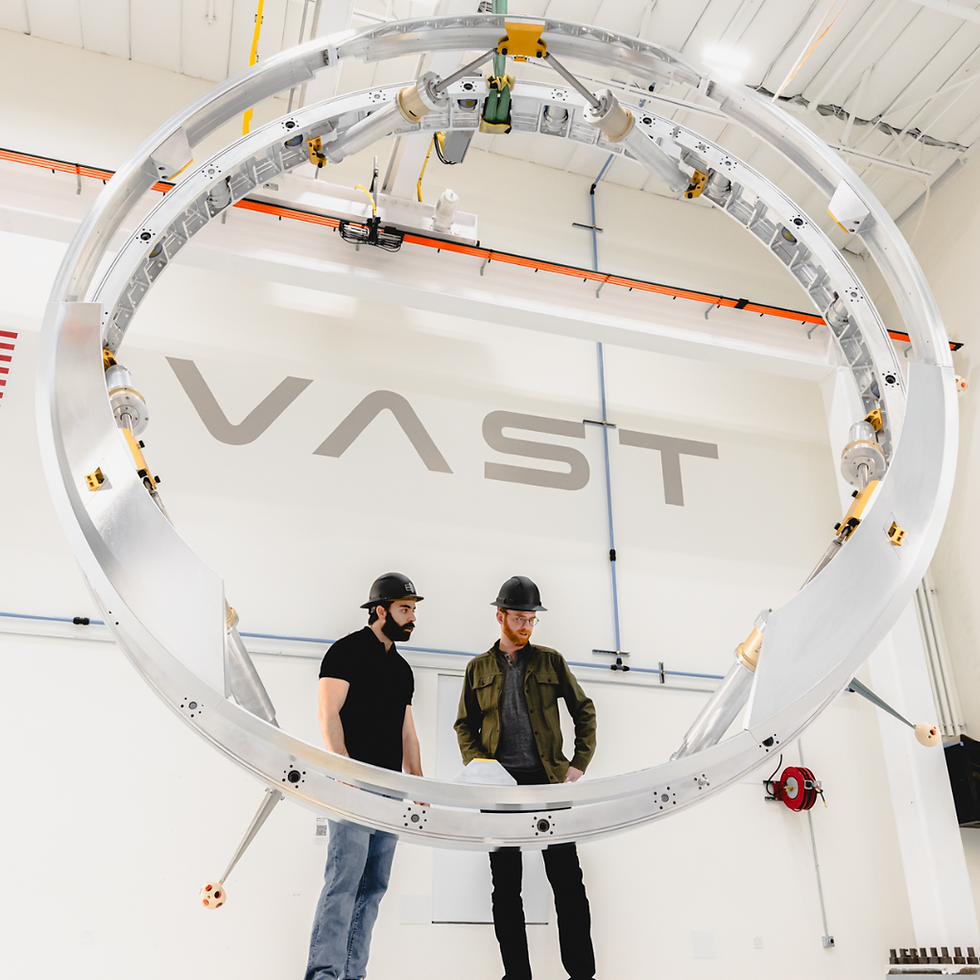
Vast, the only operational commercial space station company to have flown and operated its own spacecraft in orbit, led by Jed McCaleb, Max Haot, and the team, has announced the Large Docking Adapter, including its current development, its availability for purchase, and Vast’s plans to open-source its interface.
Future space stations will feature larger modules, greater mass, and next-generation crewed vehicles, requiring new docking standards and universal hardware.
The Large Docking Adapter is designed to support these higher structural demands while enabling interoperability across different vehicles and modules. By open-sourcing the interface, Vast aims to drive industry collaboration and accelerate the development of standardized space systems.
The adapter is designed to support high-mass payload separation, scalable station architectures with 2 to 20+ modules, and module-to-module connections.
It maintains compatibility with the International Docking System Standard while enabling docking for larger crewed vehicles and standardized interfaces across commercial and international partners.
Engineered for Strength, Scale, and Accessibility
Designed for next-generation stations, the adapter features an androgynous architecture, allowing any two compatible vehicles or modules to dock without fixed roles, enabling greater flexibility and higher mission cadence.
Its system includes a soft-capture mechanism (petals, latches, passive actuators) and a hard-capture system (alignment pins, powered bolts, redundant pressure seals), delivering significantly higher structural strength, up to 30× more rigid than the International Docking Adapter.
The design also improves accessibility, supporting a large pressurized opening (up to 6.6 m²) for more efficient crew and cargo transfer.
Interested parties can purchase the adapter from Vast or manufacture their own using the open-sourced interface guide. The company is inviting space agencies, station developers, and vehicle manufacturers to adopt the standard and help shape next-generation docking systems.


