Antioch Raises $32M to Bring Software Speed to Physical AI Development

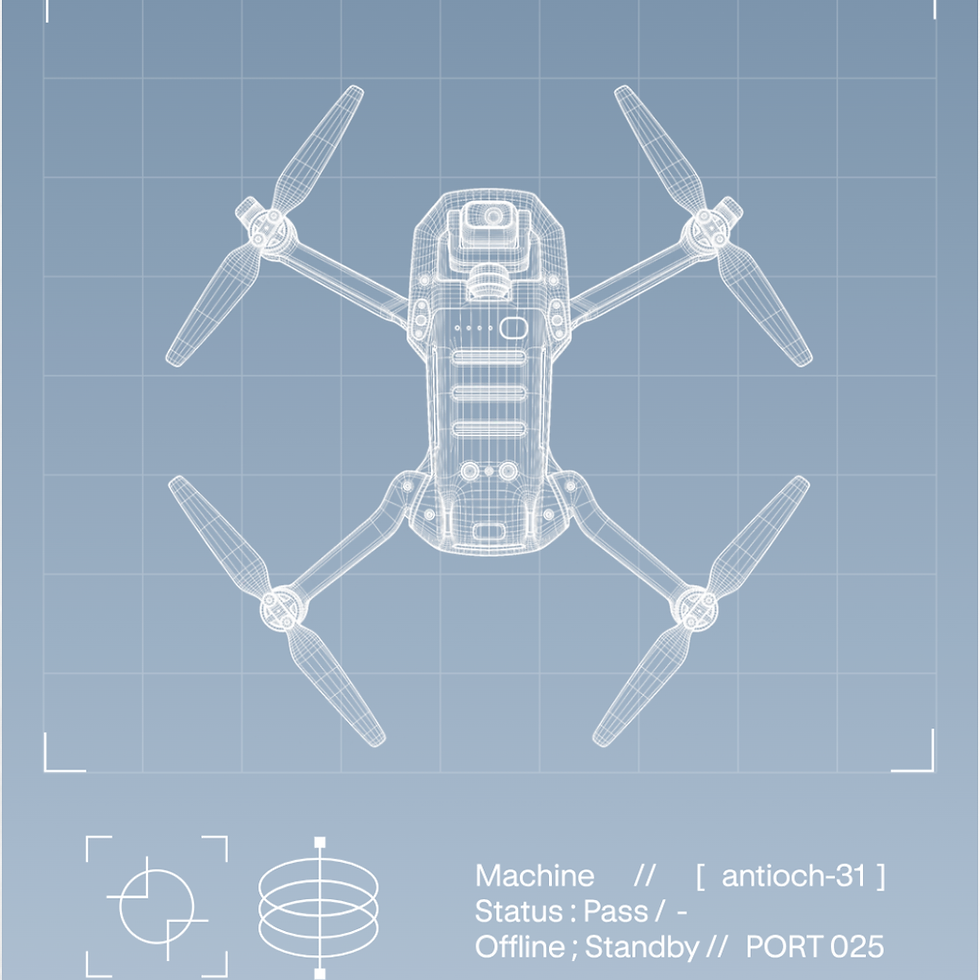
Antioch, the simulation platform for robotics and autonomy, led by Harry Mellsop, Alex Langshur, Michael Calvey, and Collin Schlager, has raised $32 million to bring software speed to physical AI development. Together with the $8.5 million seed round announced earlier this year, this brings the total funding raised to $40.5 million. Greylock General Partner Saam Motamedi joins the company's board.
“Software-speed innovation in the physical world will be the foundation of the next industrial revolution. We believe Antioch is building the core development platform for this next phase of physical AI.”
— Saam Motamedi, General Partner, Greylock
Develop Physical AI at the Speed of Software.
Software development benefits from a tight feedback loop: engineers and AI agents can make changes, run tests, inspect failures, and iterate thousands of times before deployment. Physical AI lacks an equivalent because robotics teams cannot cheaply reproduce field failures or test thousands of combinations of weather, terrain, hardware, and behavior.
Instead, development relies on physical test sites, recorded datasets, hardware-in-the-loop systems, and manually operated fleets. These approaches are expensive, slow, difficult to parallelize, and limited in coverage, leaving physical AI development constrained by the speed of the physical world.
Antioch is building a verifier for physical AI, a development environment designed to predict whether changes will improve a physical system before reaching hardware. It combines customer hardware, sensors, software, models, environments, and operating constraints in a continuously calibrated simulation and evaluation environment.
Teams can run thousands of scenarios in parallel, identify failures and regressions, and use real-world results to improve simulation accuracy. This enables engineers and AI agents to test changes to perception models, planners, controllers, sensors, or mechanical designs before physical deployment.
What this Makes Possible.
Continuous evaluation: Changes can be tested against edge cases before reaching hardware.
Faster development: Engineers and agents can iterate, diagnose failures, and verify improvements without waiting for physical test cycles.
Synthetic data generation: Large datasets can be generated for rare failures, unusual environments, and new hardware configurations that are expensive, impractical, or dangerous to collect in the real world.
From Classical Simulation to Learned World Models.
Physical-world simulation generally falls into two approaches. Classical simulation uses 3D engines, physics solvers, and hand-defined models. It is controllable and interpretable and can operate with limited real-world data, but struggles to accurately model complex interactions such as contact-rich manipulation, deformable objects, and unpredictable environments.
Learned world models instead use data to learn how physical systems and their environments respond to actions. With enough representative data, they can capture behaviors that are difficult to model explicitly. The long-term direction is toward increasingly learned simulators, potentially trained end-to-end as data and compute expand.
The challenge is that physical data remains expensive and slow to collect, while failures and edge cases are rare. Data from the latest system versions is even more limited, particularly for scenarios that are difficult, dangerous, or costly to reproduce.
Program What Is Known. Learn What Is Not.
Antioch combines both approaches. Known elements, including geometry, kinematics, hardware specifications, sensor layouts, and physical constraints, are explicitly modeled, while real-world data is used to learn harder-to-describe behaviors such as sensor characteristics, complex interactions, and differences between nominal and real-world systems.
The resulting simulations are used for real engineering decisions today. As more data becomes available, learned components can replace explicit approximations, and increasingly larger parts of the simulator can be trained together. Antioch integrates the real-to-sim-to-real loop to continuously improve simulation fidelity and move toward end-to-end learned world models.
Already Accelerating Physical AI Teams.
Antioch is already being used by Physical AI companies to reduce development costs, expand evaluation coverage, accelerate engineering, and train advanced models across automated manufacturing, intelligent perception, drones, autonomous vehicles, robotics, and other applications.
“Antioch’s simulations have closely matched our physical test results, including in scenarios we deliberately held out of calibration. That confidence lets us move more testing and development into simulation, reducing reliance on costly physical test programs, accelerating engineering cycles, and allowing our teams to focus on delivering better products for customers.”
— Jason Mitura, VP of Software Development at Amazon and Chief Product Officer of Ring
Launchpad Build AI is using Antioch to accelerate the development of AI-powered manufacturing systems:
“With Antioch, we have been able to meaningfully accelerate our time to market. We can test all of the scenarios that our systems will see in production, and edge cases that are otherwise impractical or uneconomical. This is critical for a company like ours, with teams on each side of the Atlantic. Simulation isn’t new, but simulation with this kind of impact is.”
— Jon Quick, CEO, Launchpad Build AI
Building With the Physical AI Ecosystem.
Scaling physical AI development requires deep integration across the technology stack. Simulation engines and cloud infrastructure provide the foundation, while Antioch integrates complete hardware and software systems, manages scenarios and evaluations, analyzes failures and regressions, and continuously improves the sim-to-real gap.
Antioch is partnering with NVIDIA and integrating its open physical AI stack, including NVIDIA Omniverse libraries, Isaac Sim, and Isaac Lab. These technologies enable developers to build and test complex physical systems across large sets of simulated scenarios and scale robotics development in the cloud.
The company is also working with Nebius to provide high-performance simulation infrastructure at the scale required for continuous physical AI development.
“Simulation has the potential to be a massive unlock for physical AI, but it remains one of the hardest parts of the stack to get right. Antioch is the best team we’ve seen at solving the problems that matter most, including scene creation, eval analysis, and most importantly, closing the sim-to-real gap. Together with Nebius infrastructure, they’re turning simulation from a highly specialized capability into something physical AI teams can use continuously to develop, test, and improve their systems.”
— Evan Helda, Head of Physical AI, Nebius
𝐑𝐞𝐦𝐨𝐭𝐞 𝐇𝐢𝐫𝐞 𝐖𝐢𝐭𝐡 𝐔𝐬: 𝐌𝐞𝐧𝐥𝐨 𝐓𝐚𝐥𝐞𝐧𝐭 helps technology companies hire exceptional remote talent from India. Build your team with carefully curated engineers, product leaders, designers, GTM professionals, and more. Learn More At: https://www.menlotimes.com/menlo-talent


