Altara - the Scientific Intelligence Platform for the Physical World Announces its Launch
- Karan Bhatia

- May 6
- 2 min read
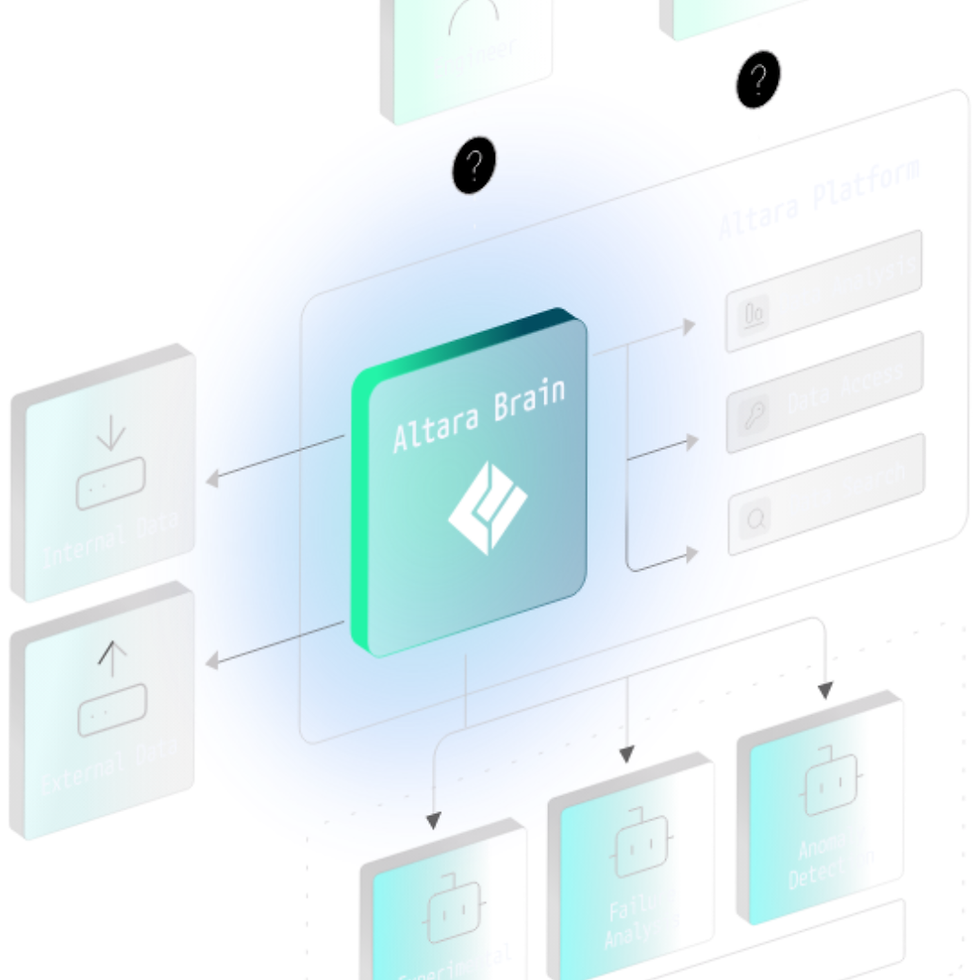
Altara, building scientific intelligence for the physical world, led by Catherine Yeo and Eva Tuecke, has announced its launch. The company has raised a $7M seed round from Greylock Partners, Neo, BoxGroup, Liquid 2 Ventures, and angel investors, including Jeff Dean and leadership from OpenAI and AMD.
The first wave of AI has accelerated digital work across writing, coding, and customer support, while progress in the physical world has lagged. A new era is now emerging, driven by advances in hardware, from semiconductors and batteries to robotics and space systems.
These breakthroughs are unified by a common foundation: reliance on frontier research and discovery in the physical sciences.
The Bottleneck in Scientific R&D
The path from hypothesis to commercialization remains slow and complex, constrained by three core challenges:
Data fragmentation: Critical information is scattered across specialized tools, spreadsheets, data lakes, and unstructured formats like reports and presentations.
Legacy systems: Many organizations still rely on decades-old, on-prem software, where vital data becomes inaccessible or unusable.
Manual analysis: Scientists and engineers spend significant time on high-stakes data wrangling, limiting speed and efficiency in decision-making.
Bridging the Gap: from R&D to Manufacturing
While software has dramatically accelerated digital creation, bringing physical technologies, like semiconductor chips, to market still takes years.
Altara addresses this gap by capturing scientific and engineering workflows across the full product lifecycle, from R&D to manufacturing, reducing weeks of work to minutes. Its agents process complex, multimodal data, including wafer maps, SEM imagery, time-series instrument data, spreadsheets, and legacy systems, to enable faster, more informed decision-making.
This approach allows organizations to design better experiments, diagnose failures more quickly, uncover hidden insights, automate complex analysis, and significantly shorten the path from discovery to commercialization.


