Quantum Motion Raises $160 Million Series C to Deliver Quantum Computing’s “Transistor Moment”

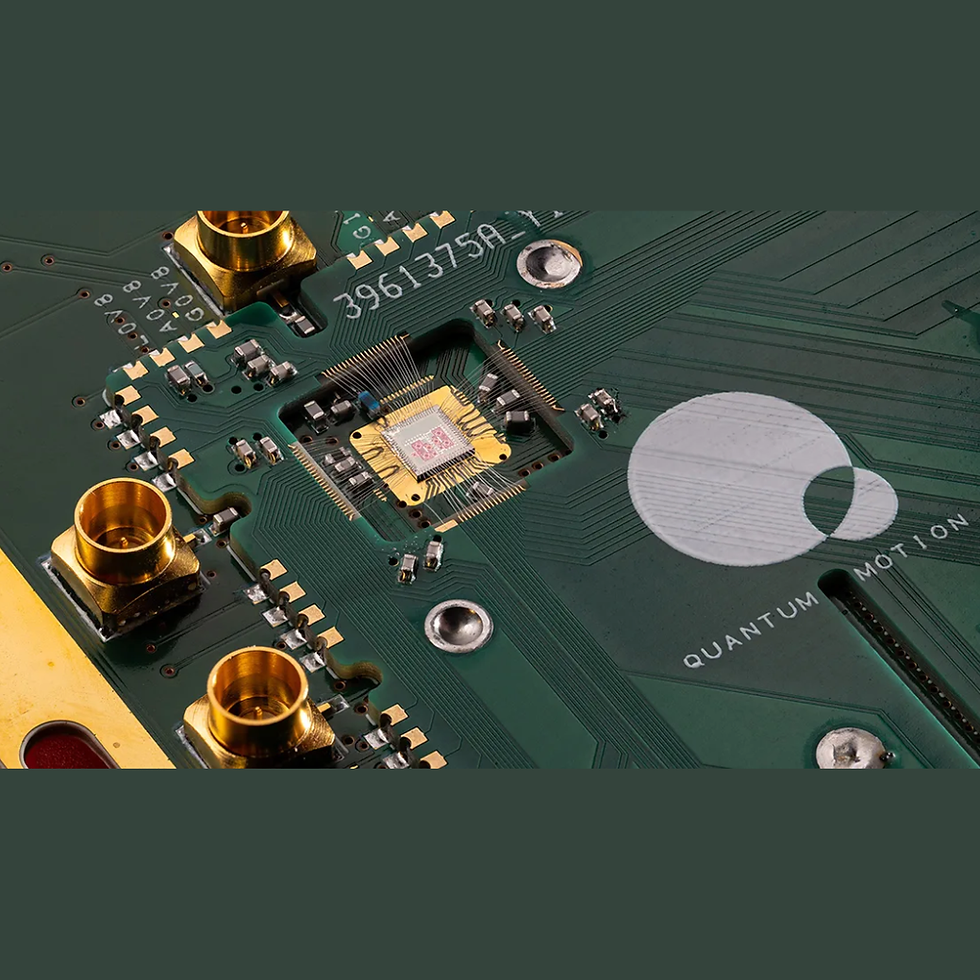
Quantum Motion, building a full-stack CMOS quantum computing, led by James Palles-Dimmock, Simon Benjamin, John Morton, and the team, has announced a $160 million Series C round to commercialise its scalable and energy-efficient approach to quantum computing. The round is co-led by DCVC and Kembara, with participation from new investors, the British Business Bank, and Firgun, alongside existing investors Oxford Science Enterprises, Inkef, Bosch Ventures, Porsche Automobil Holding SE, and Parkwalk Advisors.
The financing positions Quantum Motion to develop utility-scale, commercially viable quantum computers designed to operate within standard data centre infrastructure and server racks.
The financing comes as AI and next-generation computing systems drive massive infrastructure and power demands. Quantum Motion is developing a more efficient approach to scalable quantum computing, avoiding the industrial-scale energy requirements expected from many competing architectures.
Quantum Motion’s silicon transistor-based approach, built on the same technology used in modern smartphone and laptop chips, aims to deliver utility-scale quantum systems with 100× lower cost and space requirements, alongside 1,000× lower energy consumption compared to alternative architectures. The systems are designed to operate within standard data-centre racks, eliminating the need for specialized facilities and large energy overheads.
Since 2023, Quantum Motion has expanded into Spain and Australia, strengthened its partnership with GlobalFoundries, and focused on industrial scalability over headline qubit counts. The company also delivered the first commercial deployment of a full-stack silicon CMOS quantum computer at the National Quantum Computing Centre and advanced to Stage B of DARPA’s Quantum Benchmarking Initiative.
James Palles-Dimmock said the funding reflects the strength of the company’s team and progress, while reinforcing its belief that silicon provides the most scalable path for quantum computing. He also noted that the new investors share Quantum Motion’s long-term vision for building a foundational company in the sector.
John Morton and Simon Benjamin said the company was inspired by the scalability and complexity of modern silicon technology, and believes the same chip-based approach can enable quantum computers that are both high-performance and widely deployable.
Prineha Narang described quantum computing as critical infrastructure for the future of computing, AI, and security, adding that long-term leadership will depend on the ability to industrialize the technology. She said DCVC backed Quantum Motion because of its silicon-based CMOS approach and its focus on turning quantum computing into a commercially scalable platform.
Yann de Vries said Kembara’s investment reflects a strong belief that scalable quantum computing will depend on the right underlying architecture, positioning Quantum Motion’s approach as a leading path toward large-scale commercialization.
Charlotte Lawrence said scalable quantum computing is one of the defining technological challenges of the coming decades, noting that Quantum Motion’s combination of quantum physics and silicon manufacturing provides a global advantage. She added that the focus has shifted from theory to building real-world quantum computing platforms in the UK.


