Monumental Raises $32 Million Led by Khosla Ventures to Scale the Robots Already Building the Physical World

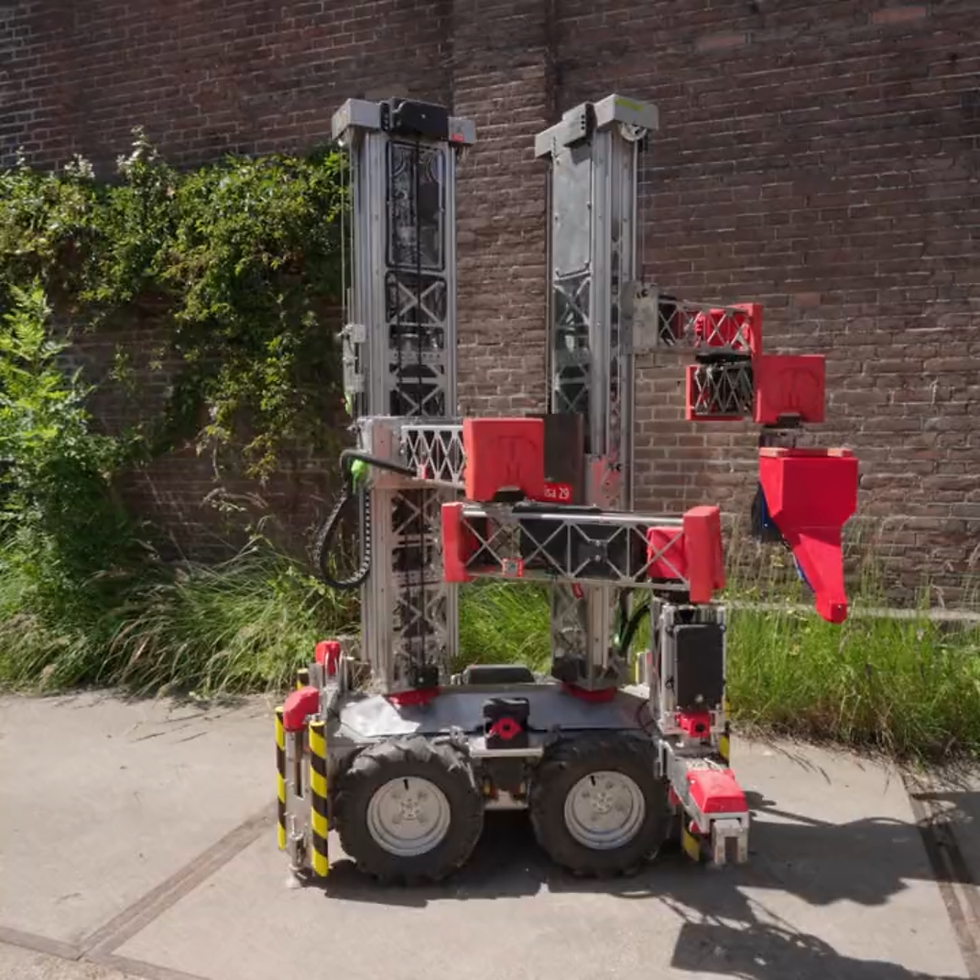
Monumental, making construction autonomous, led by Salar al Khafaji and Sebastiaan Visser, has announced a $32 million Series B led by Khosla Ventures, with participation from existing investors Hummingbird, Plural, and others. The round will grow Monumental’s world-class team of hardware and software engineers, scale the number of robots it can deploy across Europe, launch the company in the US this year, and expand the range of construction tasks the robots can handle.
The U.S. construction industry faces a shortage of 200,000–400,000 workers each month, with an estimated need for 2.2 million additional workers over the next three years to meet demand. Monumental is addressing this gap with a fleet of more than 100 autonomous robots already operating as subcontractors on real-world construction sites, helping accelerate the delivery of essential housing and infrastructure.
“The world does not have enough workers to build the homes and infrastructure it needs, and solving that challenge requires machines that can perform real construction work on-site. Monumental’s autonomous robots are already laying bricks at scale, helping expand the industry’s capacity to build. With this investment, the company will deploy more robots across additional markets while expanding beyond bricklaying to further transform construction.” — Salar al Khafaji, Co-founder and CEO, Monumental.
Monumental’s electric autonomous robots use advanced sensors, computer vision, and crane systems to lay brick and mortar with millimeter precision, powered by its AI software platform, Atrium. The company has already built walls for more than 100 homes across the Netherlands and the UK, as well as schools, community centers, hotels, and canal infrastructure, demonstrating the viability of autonomous construction. Deployment is accelerating, with nearly half of these projects completed in the past three months. The new funding will support the expansion of Monumental’s engineering teams as the company scales its technology across markets and construction applications.
“Construction costs have risen dramatically while the industry has seen limited transformation for decades, contributing to today’s housing challenges. Monumental is addressing this gap by bringing robotics into real-world construction, with autonomous systems already delivering completed projects including homes, schools, and infrastructure. The company is demonstrating that high-quality buildings can be built more efficiently and at greater scale.” - Vinod Khosla, Founder of Khosla Ventures.
Construction remains one of the least transformed major industries. While U.S. manufacturing productivity has increased more than eightfold since 1945, construction productivity has grown only marginally and has declined since the 1960s. Despite supporting nearly every sector and representing around 13% of global GDP, the industry continues to face severe labor shortages. Monumental addresses this challenge by adding autonomous capacity, enabling crews to transition toward safer, higher-skilled roles operating advanced robotic systems.
“Since the initial investment, Monumental has emerged as one of the most deployed autonomous construction operators globally, tackling a major industry challenge in Europe. This progress reflects a strong team and a focused approach to addressing the underlying gaps in construction rather than applying temporary solutions.” - Sten Tamkivi, Partner at Plural.
Contractors work with Monumental as a subcontractor, paying for completed walls rather than purchasing and managing robotic equipment. This outcome-based, forward-deployed model removes the cost and complexity of owning autonomous systems, allowing customers to focus on the finished result. Founded by Salar al Khafaji and Sebastiaan Visser, the team previously built Silk, acquired by Palantir in 2016, and applied a forward-deployed engineering approach to robotics years before it became an industry trend.


